
DartCounter Statistics
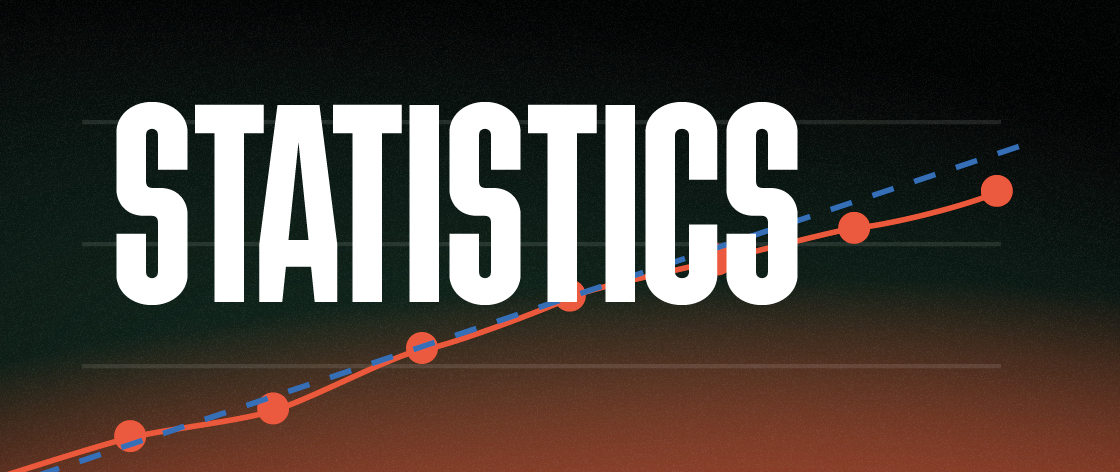
Darts statistics help you understand how you play, where you are improving and which parts of your game may need more attention. In DartCounter, you can use statistics to track your averages, checkout performance, match results and progress over time.
Players without an Ultimate subscription can view one statistic for supported game modes, while DartCounter Ultimate unlocks more detailed statistics, additional performance data and filters. Statistics for 121 Checkout, Halve-It and Random Checkout are only available with Ultimate.
What are darts statistics?
DartCounter measures different parts of your performance, including how much you score, how effectively you finish legs and how your results develop over time.
Your three-dart average gives an indication of your overall scoring level, while your checkout percentage shows how often you convert checkout opportunities. Other statistics, such as darts per leg and match results, help you understand how efficiently you are playing.
By looking beyond individual match results, statistics can reveal patterns that are difficult to notice while you are playing. Terms such as average, checkout and leg are explained in more detail in our Darts Glossary.
Why statistics matter
In depth statistics show more than whether you won or lost. A match result tells you the outcome, while your performance data helps explain how that result was achieved.
A rising average may indicate that your overall scoring level is improving, while a low checkout percentage can show that finishing deserves more attention. If the average number of darts you need per leg falls over time, you are generally completing legs more efficiently.
This makes statistics useful for players at every level. Newer player can use them to identify broad strengths and weaknesses, while more experienced players can look for smaller areas where they can improve.
If your statistics show that finishing is an area to work on, our Checkout Guide can help you learn common checkout routes and improve your decision making at the end of a leg.
Key statistics in DartCounter
DartCounter provides insights into different parts of your game, from scoring and finishing to match and tournament results. The exact statistics available depend on the game mode and whether you have an Ultimate subscription.
Three dart average
Your three dart average shows how many points you score on average per visit. It is one of the most commonly used statistics in darts and provides a clear indication of your overall scoring level.
First nine-dart average
Your first nine-dart average measures your scoring during the first three visits of a leg. it helps you understand how strongly and consistently you start before reaching the checkout phae.
Checkout percentage
Your checkout percentage shows how often you successfully finish a leg after receiving a checkout opportunity. Finishing can make the difference between winning and losing a leg, making this one of the most important statistics to follow.
Checkout statistics
Your checkout statistics provide more detail about the finishes you attempt and complete. They can help you understand which checkouts you regularly convert and where you may need more practice.
Darts per leg
Darts per leg shows how many darts you need on average to complete a leg. A lower number usually means that you are scoring and finishing more efficiently.
Match and tournament results
DartCounter also tracks broader results, including matches won, drawn and lost, as well as tournaments played and won. These statistics provide an overview of your competitive performance over time.
Filters
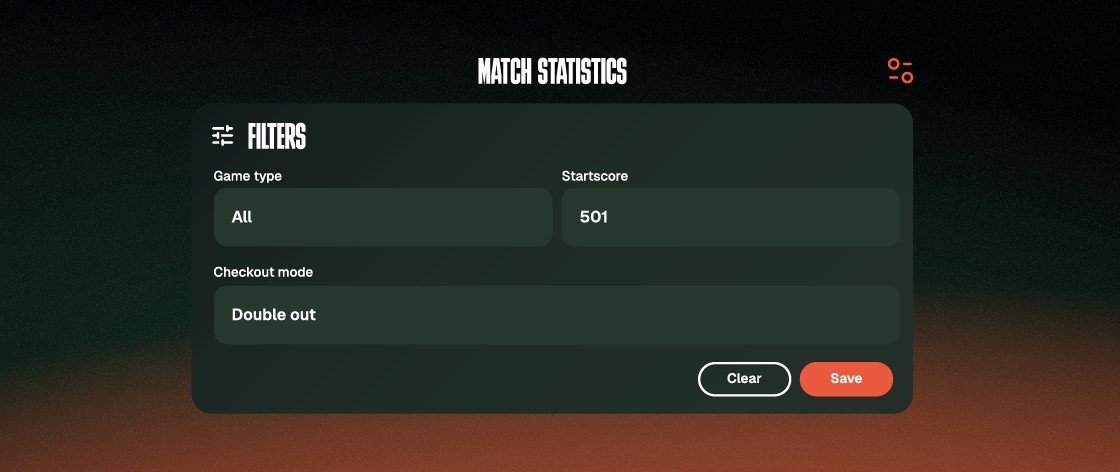
With DartCounter Ultimate, you can use filters in the statistics section to focus on specific parts of your game instead of combining every result into a single overview.
You can filter statistics by game type, match type and time period. This makes it easier to compare similar matches, review your progress and identify changes in your performance.
For match statistics, filters such as starting score and checkout mode allow you to compare games played with the same settings. You can, for example, review matches from a specific starting score or compare games played with double out, master out or straight out.
Time filters help you analyse your development across different periods. Depending on the statistic, you can view your result by day, week, month, year or all time.
Statistics across different game modes
DartCounter includes a range of match formats and training games. Statistics help you understand how your performance changes across these different formats.
Match statistics provide an overview of your general playing level, including your average, checkout percentage and darts per leg. Training games allow you to to focus on specific skills, such as doubles, scoring consistency, board coverage and checkout performance.
The exact statistics differ by game mode. Players without an Ultimate subscription can view one statistic for supported game modes, while Ultimate unlocks the full set of available data. Statistics for 121 Checkout, Halve-It and Random Checkout are fully locked for players without Ultimate.
This means that the statistics section is useful for more than reviewing match results. You can also use it to identify which parts of your game to practice next. Explore the Features & Games overview ti find games that match the areas you want to improve.
Improve your game
The most effective way to use dart statistics is to look for patterns over time. One match rarely provides enough information to assess your true level, but repeated results can show whether your performance is improving or where additional practice is needed.
When your three-dart average rises consistently, your scoring may be becoming more reliable. When your first 9-dart average is strong but your checkout percentage remains low, you may be scoring well at the start of the legs but losing opportunities during the finishing phase.
A high number of darts per leg can indicate that you need to improve your scoring, finishing or both. An improving checkout percentage usually means that you are becoming more reliable when given the chance to complete a leg.
Avoid focusing on only one number. A strong darts player does not rely on scoring alone. Finishing, consistency, efficiency and match results all contribute to overall performance.
Tips for reading your stats
Review your statistics over a longer period instead of judging your performance after a single match. One result can be affected by your form, concentration or the opponent you played against. Longer-term trends provide a more accurate picture.
Compare related statistics together. Your 3-dart average, checkout percentage and darts per leg tell a more complete story when viewed side by side.
Use filters to make your comparisons more relevant. You could, for example, review online matches separately from local matches or analyse only 501 games played with double out.
Finally, use your results to choose what to practice next. When your finishing statistics are weak, focus on checkout and doubles training. When your scoring average is inconsistent, spend more time on scoring games and repeatable practice routines.
Get more insights into your game
Unlock more detailed statistics and filters with DartCounter Ultimate. Analyse your performance across different games and use your resuls to understand where you can improve