

Dart Board Types
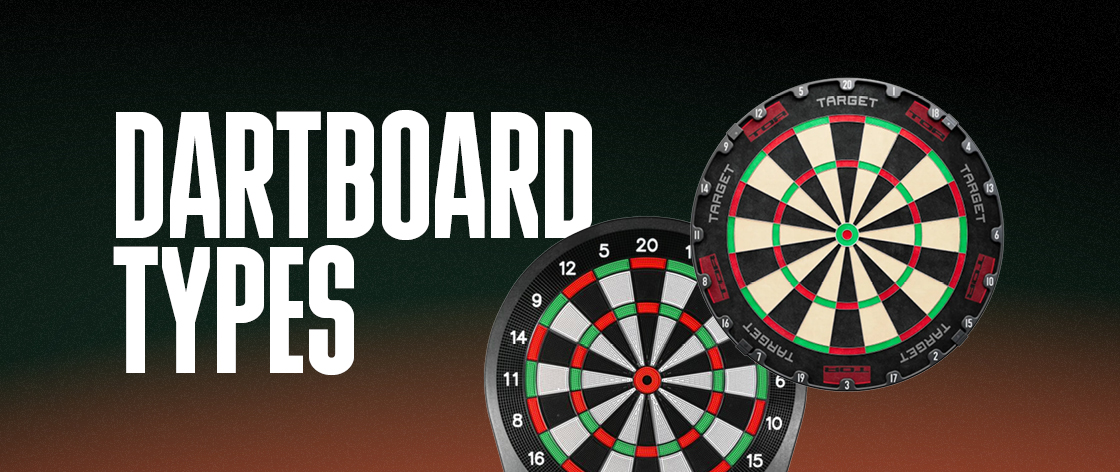
The most common types of dartboards are bristle dartboards, electronic dartboards, cork dartboards, paper dartboards and magnetic dartboards. For serious darts practice, a bristle dartboard is usually the best chocie. For casual play and automatic scoring, an electronic dartboard can be more convenient.
The right dartboard depends on your darts, your space and how seriously you want to practise. Steel tip darts need a suitable bristle board. Soft tip darts need an electronic or soft tip board.
Bristle dartboards
A bristle dartboard is the standard choice for steel tip darts. Most quality bristle boards are made from compressed sisal fibres. When a dart enters the board, the fibres separate and then close again after the dart is removed. That is why bristle boards are often described as self healing.
Bristle boards are used by serious players because they offer the most traditional playing experience. They work well for 501, checkout practice, doubles training and most standard darts games.
Electronic dartboards
An electronic dartboard is usually used with soft tip darts and mostly popular in the USA and Asian countries. The board detects where the dart lands and keeps score automatically. This makes electronic boards popular for beginners, families and social play because players do not need to calculate every score manually. It is also possible to track your scores automatically on a sisal board, but this requires additional devices like the Target Omni.
Electronic boards are convenient, but the playing feel is different from a bristle board. The plastic segments, lighter darts and automatic scoring can make the game feels less like traditional steel tip darts.
Cork and paper dartboards
Cork and paper dartboards are usually cheeper and more casual. They can be useful for occasional play, but they are less durable than a quality bristle board. They are not the best choice for regular training because they wear out faster and may not hold darts as consistently.
If your goal is to improve your throw and track progress over time, a better board is usually worth the investment. A poor board can create more bounce-outs and make practice less reliable.
Magnetic dartboards
A magnetic dartboards uses flat magnetic darts instead of sharp points. This makes it a safer option for children or very casual environments, but it not suitable for serious darts practice. The flight, scoring and board feel are too different from normal darts. Magnetic boards are best seen as an introduction to aiming games rather than a real training tool for darts.
Practice and training boards
Some dartboards are designed specifically for practice. A practice board may have smaller doubles and trebles, reduced target areas or special training segments. These boards can help experienced players improve accuracy, but beginners should usually start with a standard board first.
Once you understand the board layout and basic rules, a training board can be useful for improving consistency on doubles, triples and checkouts. To read more about darts rules or common darts terms, you can read more on our Darts Glossary page and Darts Rules page.
Which dartboard is best for beginners?
For most beginners who want to learn real darts, the best option is a standard bristle dartboard with steel tip darts. It gives the most accurate experience and prepares you for common games like 501. If you mainly want casual games with friends and automatic scoring, an electronic board may be easier.
Before choosing, think about where you will play, whether you want manual or automatic scoring, how much space you have and whether safety is an concern. The board should match both your darts and your playing goals.
How to make your dartboard last longer
Rotate a bristle dartboard regularly so that heavily used segments, especially the 20, do not wear out too quickly. Use proper darts, remove darts carefully and avoid leaving the board in damp spaces. A surround can also protect the wall and reduce damage from missed darts.
A consistent setup makes training more valuable. Once your board is properly installed, use DartCounter to track games, practise finishes and monitor improvement over time.