
Halve-It
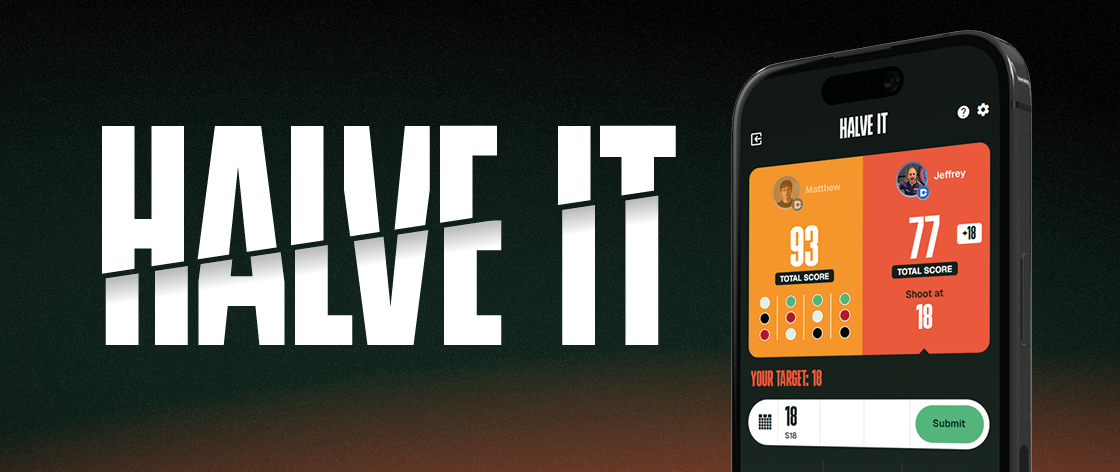
Halve-It is a darts game in which every round gives you a different target. Complete the challenge and you add points to your score. Fail the round completely and your total score is cut in half.
Because the target changes throughout the game, Halve-It tests several parts of your skills rather than focusing on one number or one area of the board. A strong lead can disappear after a single missed round, which keeps the game competitive until the final darts.
How to play
Halve-It is played over a sequence of different target rounds. In DartCounter, the standard game consists of 12 rounds.
Each player receives three darts per round. Depending on the challenge, you may need to hit a specific number, any double or treble, different colours on the dartboard or an exact score. For number, double, treble and bull rounds, every dart that hits the required target scores its normal value.
Some challenges work differently. In rounds such as different colours, exact score and same colour, you must complete the full challenge with your three darts before the round sores. If you fail the required challenge, your current total score is divided by two. For example, if you start a round with 200 points and fail the target, your score drops to 100. The player with the highest score after the final round wins.
Terms such as singles, doubles, trebles and bullseye are explained in our darts glossary. For general information about turns, scoring and match play, see our darts rules guide.
Standard Halve-It rounds
The standard Halve-It game in DartCounter follows this sequence:
There is also Random mode, this follows the same Halve-It scoring rules, but the target sequence is generated randomly. This makes each game less predictable and forces you to adapt from round to round.
Halve-It scoring
Scoring depends on the type of round. When the target is a number, such as 20 or 18, all valid darts in that segment contributes to your score. A single 20 scores 20 points, a double 20 scores 40 and a treble 20 scores 60.
The same principle applies to Double and Treble rounds. Any valid double or treble scores its normal dartboard value. Combination rounds require you to complete the full challenge. For example, in the different colours round, scoring only applies when all three darts land in different colours.
The exact score round also has to be completed precisely with three darts. Finishing above or below the required total does not complete the challenge. If you fail a round, your total score is halved. The higher your score becomes, the more costly a missed challenge can be.
Completing Halve-It
When playing alone, the aim is to finish the full sequence with the highest score possible. Your final score gives you a useful benchmark for future games.
In multiplayer games, every player completes the same sequence of rounds. The player with the highest score after 12 rounds wins. Because scores can be halved at any point, consistency is important. A player can build a large lead early in the game and still lose a significant part of it after one failed challenge.
Game settings
DartCounter lets you choose how your Halve-It game is played.
With the standard setup, you play the fixed 12 round sequence shown above. You can also choose random targets. This creates a less predictable game because the sequence changes, forcing you to adjust your aim throughout the match.
Halve-It can be played solo or with up to four players. If you prefer another game with changing targets, you can also try Random Checkout. For a more structured route around the dartboard, Around The Clock darts is another useful option.
Halve-It access
Free DartCounter users can play three Halve-It games per week. After these trial games have been used, an Ultimate subscription is required to continue playing Halve-It. With DartCounter Ultimate, you receive unlimited access to the game and can keep using it as part of your regular practice or multiplayer sessions.
Halve-it performance
After completing a Halve-It game, DartCounter gives you an overview of your result. The main statistics screen shows:
- Total score
- Success count
- Failure count
- Success rate
This provides a quick summary of how consistently you completed the challenge during the game. You can also open the detailed results for each round. Here you can see whether you completed the target, how many points you scored during that round and what your total score was afterwards.
A score graph shows how your total developed throughout the game. This makes it easy to see where you built your score and where a failed challenge caused it to drop. These statistics can help you identify which types of rounds you complete consistently and which challenges cause you the most difficulty.
Why play Halve-It?
Halve-It combines scoring, accuracy and variety in one game. The changing targets stop the session from becoming repetitive and force you to move between different areas of the board.
The halving rule also adds pressure to every round. As your total grows, missing becomes increasingly expensive, so concentration remains important throughout the game.
For solo players, that makes Halve-It a useful way to practise several skills in one session. In multiplayer games, the same rule creates regular changes in momentum and keeps the result open for longer. For players who want to work more specifically on finishing combinations, our darts checkout guide explains common routes, while the checkout calculator can help with your remaining score.
Keep your practice sharp
With Ultimate, you get more ways to practise, review your score and track how your consistency develops across different targets.
Explore Ultimate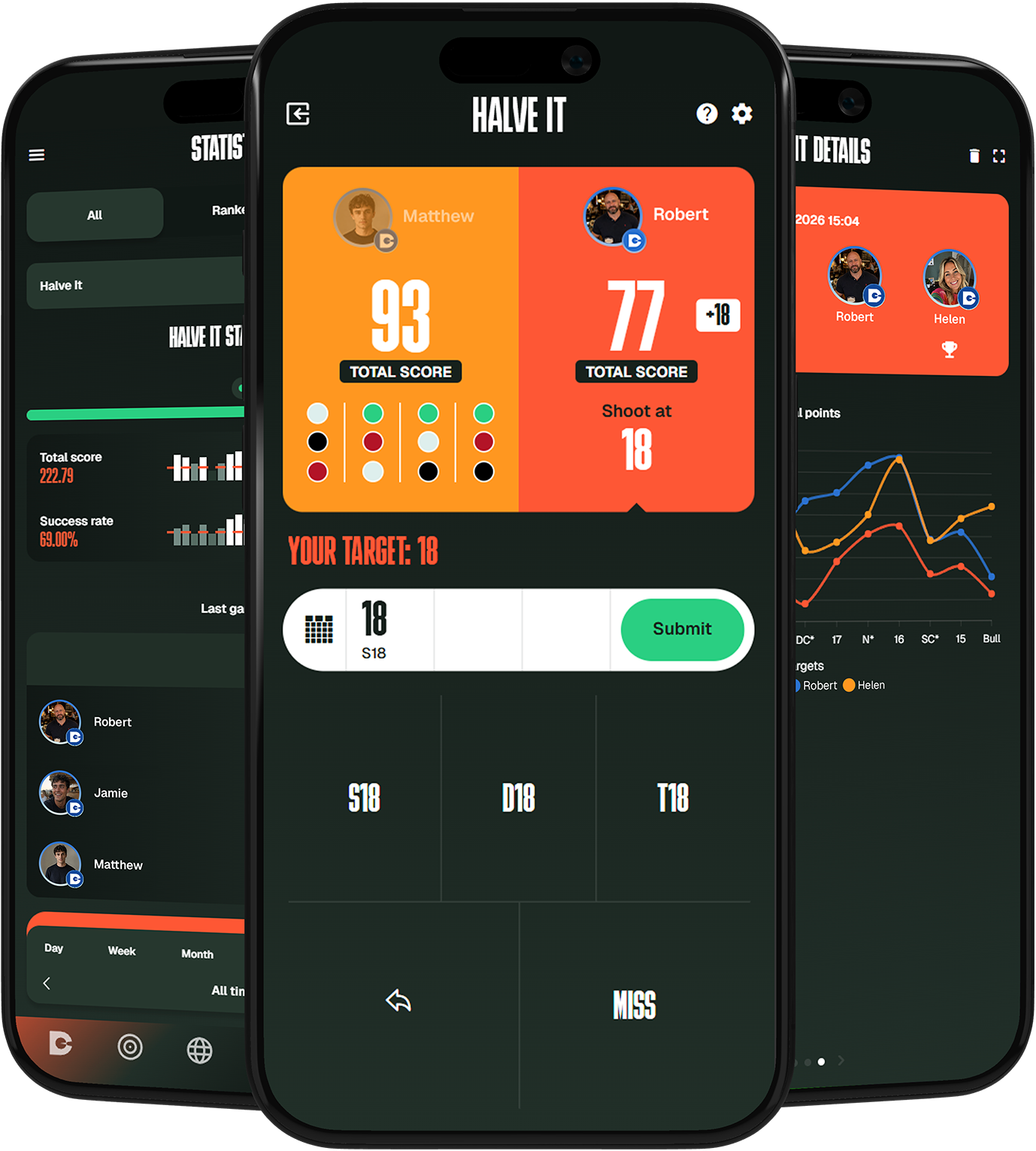
Explore more darts games