
Around the Clock Darts
Around The Clock, also known as Around The World, is a straightforward darts practice game that takes you across the entire dartboard. Instead of repeatedly aiming at the same scoring areas, you work through a sequence of targets and try to complete them as efficiently as possible.
In DartCounter, you can play Around the Clock on your own, against another player or challenge the DartBot. You can also adjust the game settings to focus specifically on singles, doubles or trebles.
The basics
In the standard version of Around The Clock, you start at 1 and work your way through every number up to 20 before completing the bull target. Each player throws three darts per turn. You continue aiming at the active target until you hit a valid segment. Once you hit it, you move on to the next target in the sequence.
By default, a single, double or treble of the active number counts as a successful hit. You can change this is the game settings if you want to practise a specific segment. If you are practising at home, make sure your dartboard is set up at the right height and distance before you start.
Around The Clock rules
You cannot skip a target. Progress depends on hitting the active target before moving on to the next one. Depending on your settings, you may also need to hit the same target more than once before you can continue.
The bull is part of the target sequence. Where it appears depends on the selected playing order. With Low to High for example, the bull comes after number 20. With High to Low, you start on the bull before working down from 20 to 1. In Random mode, the bull is placed somewhere within the random sequence.
Before starting the game, you can also choose what counts when the bull becomes the active target. You can require the single bull, the bullseye or allow either one to count. If you are unfamiliar with terms such as singles, doubles, trebles or the bull, our darts glossary explains the different sections of a dartboard. For a broader explanation of turns and standard gameplay, read our darts rules guide.
How do you win?
When playing against other players, the winner is the first person to complete every target in the selected sequence. The remaining players can continue until they also finish, allowing the game to record a finishing position for every player rather than ending as soon as someone wins.
During solo practice, the objective is different. Instead of beating an opponent, you can try to complete the same challenge using fewer darts or improve your hit percentage over multiple sessions.
Around The Clock game settings
DartCounter lets you adjust Around The Clock depending on how you want to practise.
Bull target
You can choose what counts when the bull appears in the sequence:
- Single bull
- Bullseye
- Either single bull or bullseye
Requiring the bullseye makes the target more difficult, while allowing both gives you a larger scoring area.
Valid segments
By default, any segment of the active number can count as a hit. This includes singles, doubles and trebles. You can also restrict the game to one specific segment. Singles-only gives you a larger target area, while doubles-only and trebles-only can be used for more focused practice.
Hits required
You can choose how many successful hits are needed before moving to the next target. Requiring multiple hits means you need to find the same target consistently before you can progress, increasing both the difficulty and length of the game.
Playing order
Around The Clock can be played in three different orders.
Low to High
You begin at 1 and progress through the numbers until you reach 20. The bull is the final target in the sequence. This is the standard version of Around The Clock.
High to Low
You begin on the bull before moving to 20 and working your way down to 1.
Random
All targets, including the bull, are placed in a random sequence. Because you cannot predict which target comes next, you have to locate and adjust to a new area of the dartboard throughout the game.
Increase by segment
With the setting: increase by segment enables, the segment you hit determines how far you progress through the sequence. A single moves you forward by one target, a double by two targets and a treble by three targets. This rewards more difficult hits and can help you move through the clock considerably faster.
Playing Around The Clock in DartCounter
Around the Clock can be used as a straightforward solo practice game or played competitively against other players.
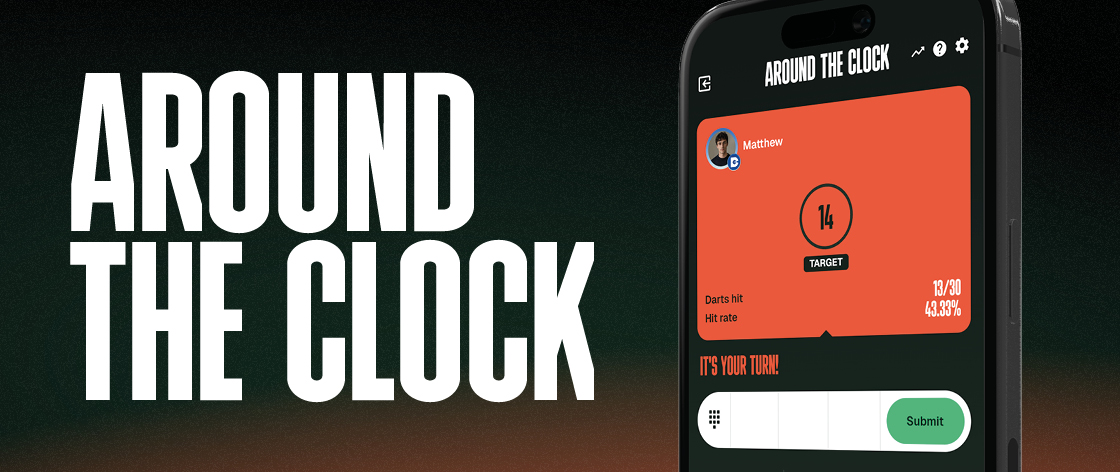
During solo practice, DartCounter keeps track of your current target and progress through the sequence. This means you can focus on your throw rather than manually keeping track of where you are in the clock.
When playing against other players, everyone follows the same selected settings and tries to complete the sequence first.
You can also use different scoring methods within DartCounter. With interactive dartboard input, you can register exactly where each dart lands. Around the Clock can also be played using Omni autoscoring.
Track your Around The Clock performance
DartCounter records more than whether you complete the game. Your results can help you measure how accurately you hit the active targets and how efficiently you complete the clock. Your hit percentage shows how often your registered darts landed in a valid segment of the required target. The number of darts thrown provides another useful benchmark. Completing the same settings with fewer darts is a clear indication of improvement.
When using interactive dartboard input, your registered darts can also be displayed on a heatmap. This can help show where your darts tend to land and whether your misses follow a consitent pattern.
Free users can review the hit percentage from their most recently played game. Ultimate users have access to more detailed statistics, including darts thrown and performance from across longer periods. This makes it easier to compare practice sessions and follow your development over time.
Around The Clock vs Singles Training
Around The Clock and Singles Training both take you across different areas of the dartboard, but they measure your performance differently. In Around The Clock, you stay on the active target until you complete it. Your progress therefore depends on hitting each target in the sequence.
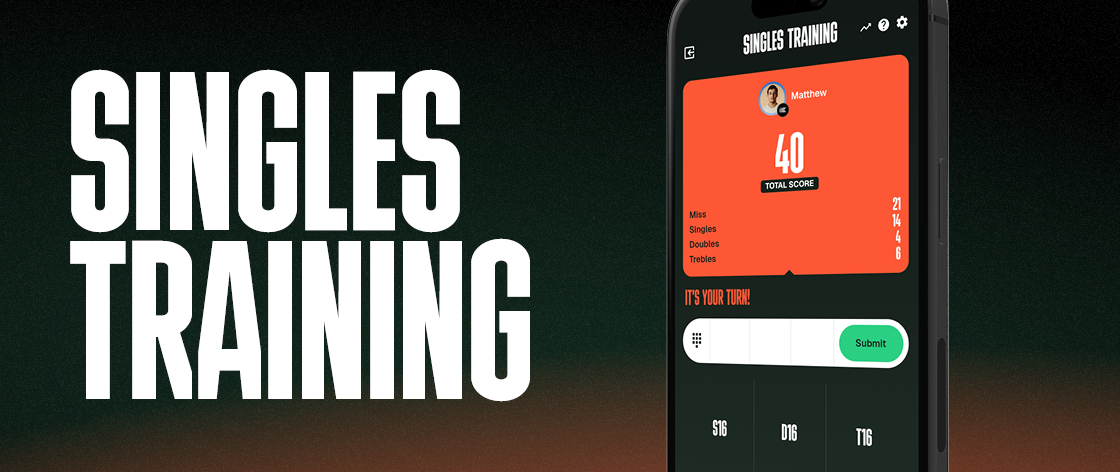
In Singles Training, you move to the next number number after each round regardless of whether you hit the previous target. Instead of trying to complete the board using as few few darts as possible, you earn points based on your successful hits.
Around The Clock is therefore useful when you want to practice completing individual targets efficiently, while SIngles Training provides a fixed structure for comparing your accuracy across different numbers.
Why play Around The Clock?
This game mode encourages you to aim at areas of the dartboard that receive less attention during games such as 501. Instead of repeatedly targeting high-scoring segments or preferred doubles, you have to become familiair with the entire board.
The standard version is accessible for newer players, while settings such as doubles-only, trebles-only, multiple required hits and Random order can make the game considerably more demanding. DartCounter keeps track of the target sequence, registered hits and your results, giving each practice session a clear objective. By comparing your hit percentage and darts thrown over time, you can see whether you are completing the same challenge more efficiently.
Make every round count
With Ultimate, you get more practice tools, deeper statistics and extra ways to track your progress while you work around the board.
Explore Ultimate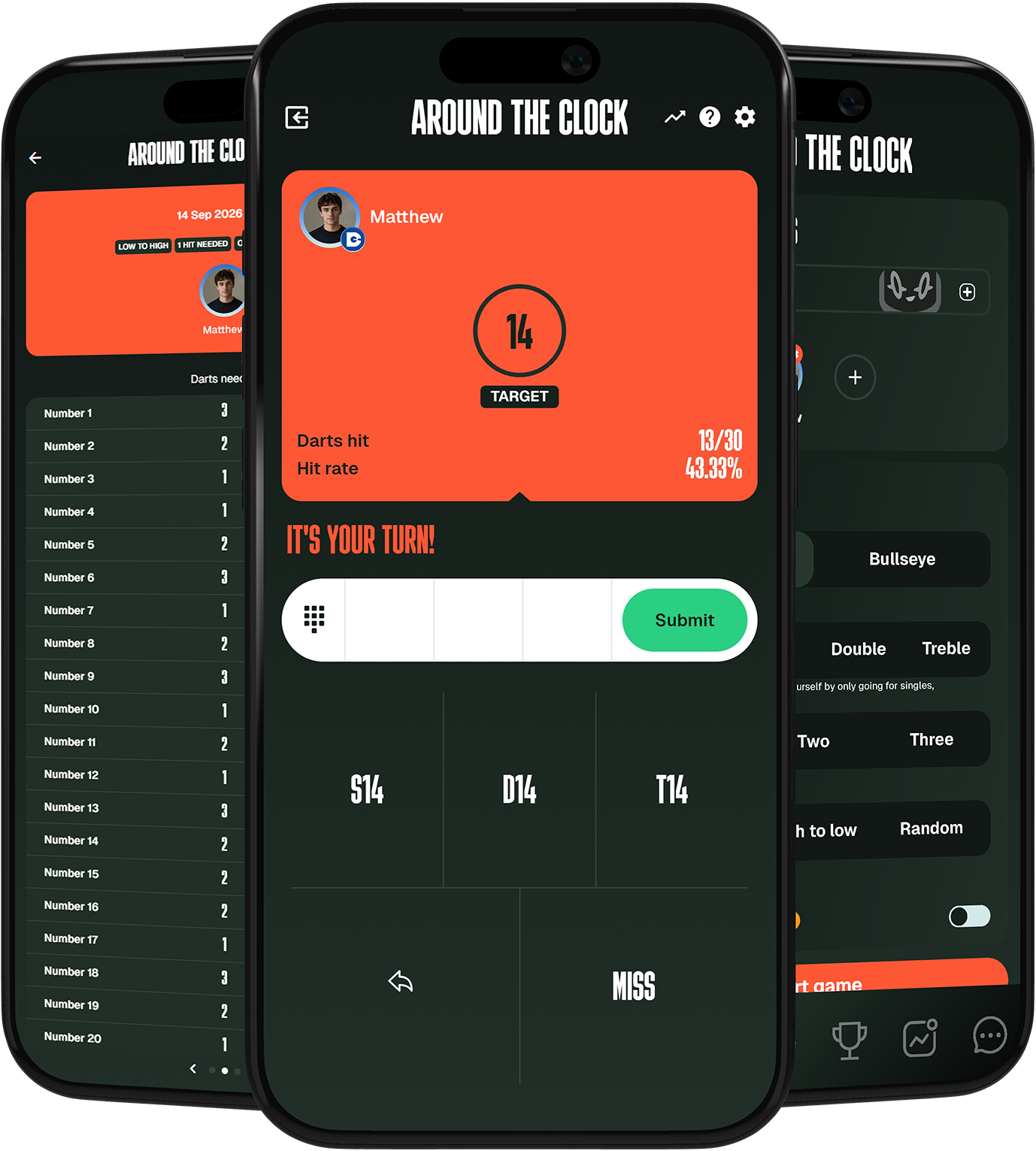
Explore more darts games