
Score Training Darts
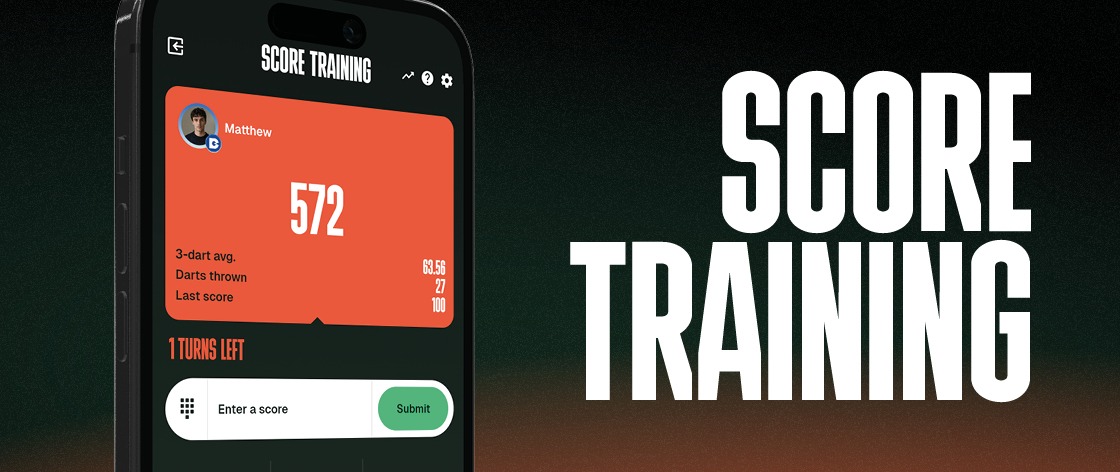
Score Training is a straightforward darts practice game built around one objective: score as many points as possible. Each visit is added to your total score, giving you a clear way to measure your scoring power and consistency. The game is particularly useful for practising high-value targets such as the treble 20 and improving the averages that matter in games such as 501 darts.
Why practise scoring?
In x01 darts, strong scoring gives you more opportunities to reach a finish before your opponent. The faster you reduce your starting total, the more pressure you place on the other player.
Score Training isolates this part of the game. You do not need to calculate a checkout, close targets or follow a predetermined sequence. Every turn is focused on producing the highest score possible.
Repeatedly aiming at high-value areas can help improve grouping around the treble 20. It can also show whether your scoring drops during longer sessions, which may indicate a loss of concentration or consistency.
Your average provides a clear benchmark, but it is also useful to review the spread of your visits. A player who regularly scores between 80 and 100 may be more reliable in a match than someone who alternates between very high and very low rounds.
How to play
In Score Training, you throw three darts per turn and try to score as many points as possible with each visit.
There is no required target or fixed route around the board. You decide where to aim, with high-value areas such as the treble 20 usually offering the greatest scoring potential. Each visit is added to your total score. After the selected number of rounds has been completed, your final score and averages show how consistently you performed throughout the session.
When playing alone, the objective is to produce the highest total and average you can over the selected number of rounds. When playing with friends, everyone completes the same number of rounds and can compare their scores throughout the session. Once all rounds have been completed, the player with the highest total score has the best result.
For explanations of scoring areas such as singles, doubles and trebles, visit our darts glossary. Our darts rules guide provides more information about turns, scoring and standard match play.
Score Training scoring
Every dart scores its normal value. Singles count once, doubles twice and trebles three times the value of the numbered segment. All visits are added together. If you score 100 in the first round and 85 in the second, your total score becomes 185. Unlike games with specific target sequences, Score Training does not penalise a miss by moving you backwards or reducing your score. A lower visit simply reduces your overall average and final total.
Game settings
You can choose how long your practice session lasts. A 10-round game provides a fixed and repeatable training format. Because every session contains the same number of darts, it is easy to compare your total score and average with previous attempts.
You can also select a custom number of rounds. A shorter session can work well as a quick warm-up, while a longer game gives you a better indication of how consistently you can maintain your scoring level.
With Infinite Practice, there is no predetermined final round. You can continue throwing for as long as you want and end the session when your practice is complete. Score Training can be played alone or with friends. Solo play is useful for focused repetition, while multiplayer sessions add direct comparison and pressure.
Track your scoring performance
After completing a Score Training session, you can review your scoring performance. Free users can review their most recent game, including their three-dart average, number of darts thrown and final visit.
With DartCounter Ultimate, you can access broader performance data, including your total score, highest visit, number of 180s, three-dart average and one-dart average. You can also review previous games and compare results across longer periods.
The three-dart average is especially useful because it adjusts for the length of the session. A high total score can partly result from playing more rounds, while your average shows how many points you produced during a typical visit. The highest visit and number of 180s add context, but consistency remains important. One exceptional round has less impact when it is followed by several low scores.
Score Training vs Singles Training
Score Training and Singles Training both help improve accuracy, but they measure different parts of your game.
In Score Training, you choose where to aim and try to maximise every visit. Most players will focus on high-value areas such as the 20 segment and treble 20.
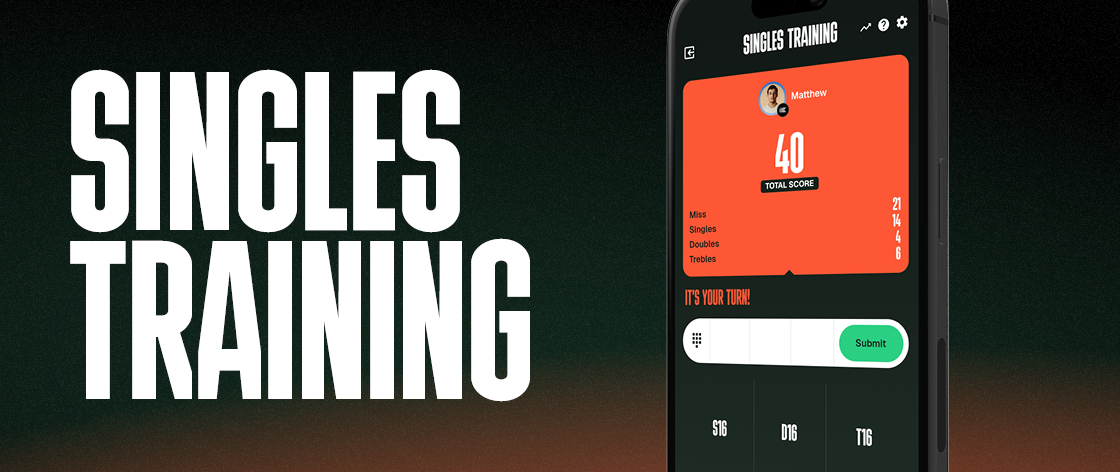
In Singles Training, you aim at a specific active target and score based on how often you hit it.
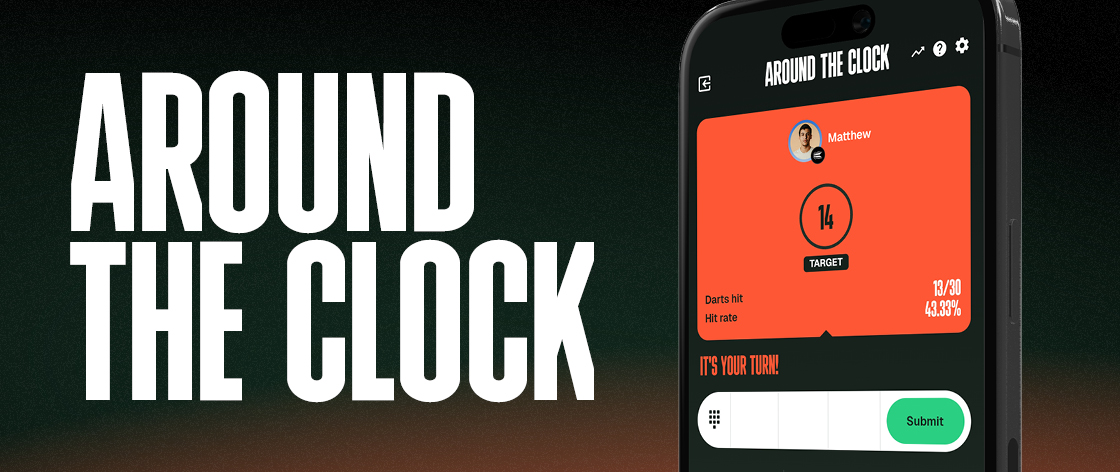
Score Training therefore focuses on overall scoring output, while Singles Training provides more controlled target practice across the dartboard. For a game that takes you through every number in sequence, you can also play Around The Clock.
Score Training and match play
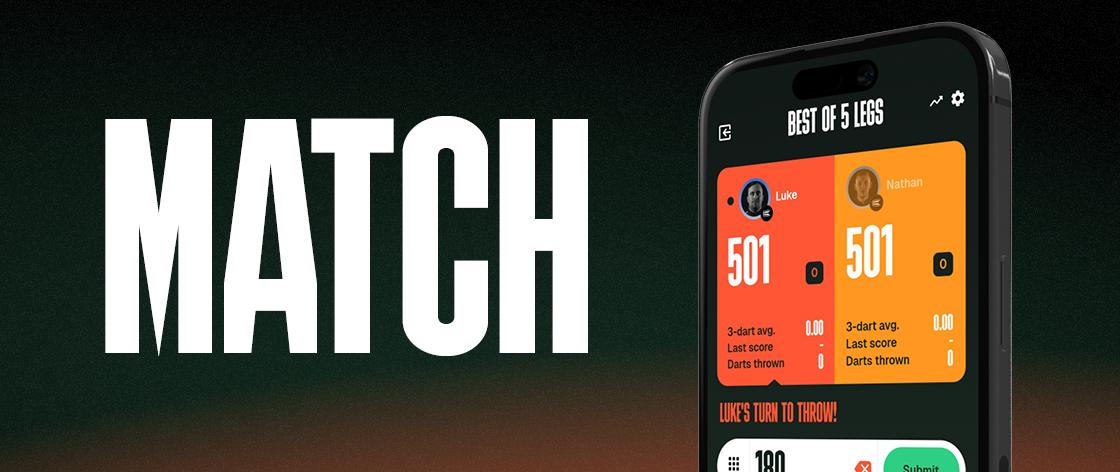
Score Training removes many of the decisions found in a regular x01 match. In 501, you may need to switch targets after a blocked treble, avoid leaving an awkward remaining score or move towards a preferred double. Score Training lets you concentrate almost entirely on scoring output.
That makes it useful as a focused drill or warm-up, but it should also be combined with games that practise other match situations. Doubles Training focuses on finishing targets, while Bob's 27 adds more pressure to doubles practice.
Together, these games let you work separately on the two main phases of an x01 leg, building a score and completing the finish. Once you reach a finishing score, our darts checkout guide explains common finishing routes, while the checkout calculator can help you explore a specific remaining score.
Building a stronger scoring game
With Ultimate, you can track more performance data, review your scoring sessions and use extra features to improve your overall game.
Explore Ultimate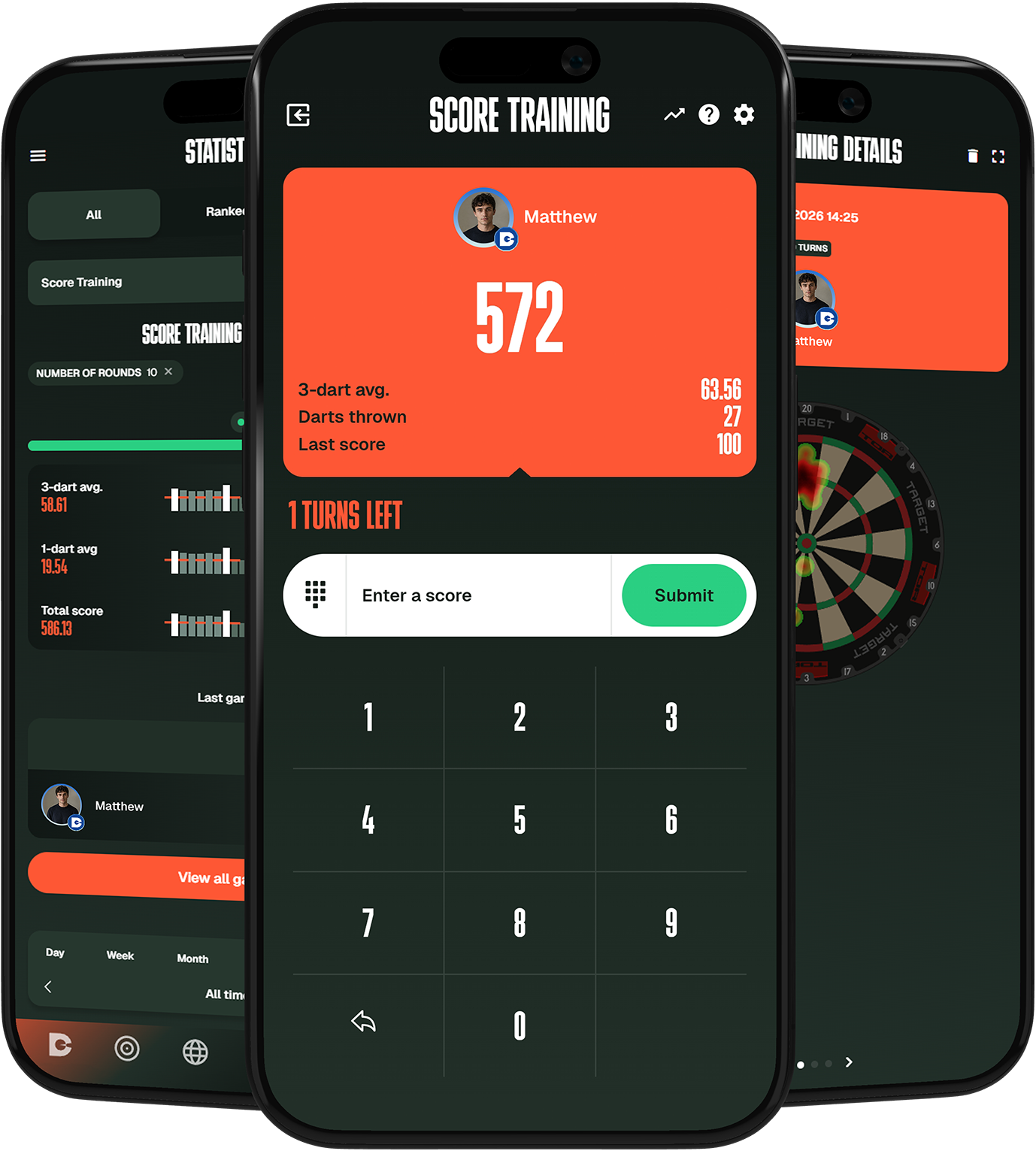
Explore more darts games