
Bob’s 27 Darts Rules
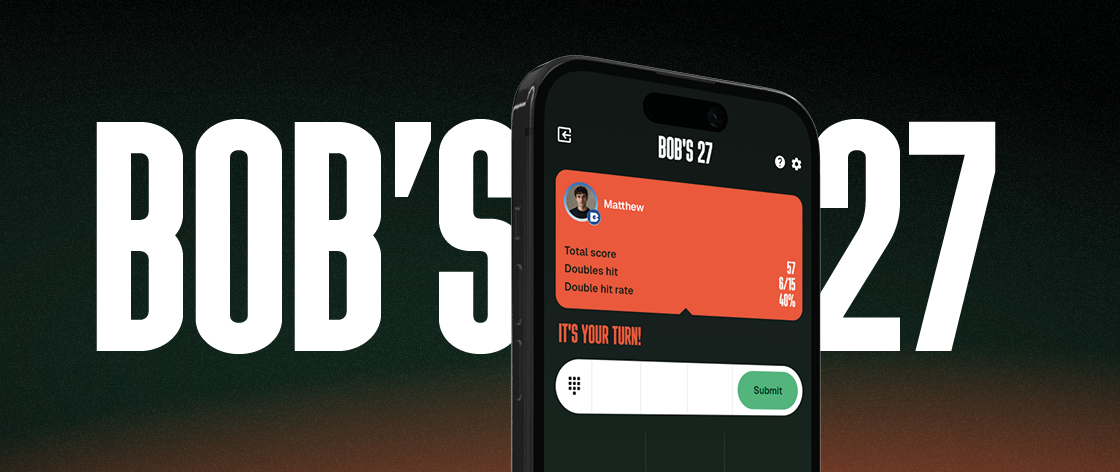
Bob’s 27 is a doubles practice game developed by former world champion Bob Anderson. The game challenges you to hit a series of doubles while adding a consequence to every missed turn.
You start with 27 points and receive three darts at each target. Successful hits increase your score, while missing the target with all three darts costs you points.
In the classic version of Bob’s 27, you work through the doubles from Double 1 to Double 20 before finishing on the bullseye. This creates a focused training game that helps you practise the doubles needed to finish legs in games such as 501 darts.
Before starting a practice session, make sure your board is set up correctly using the official dartboard height and distance.
How to play Bob’s 27
Every game of Bob’s 27 starts with 27 points. You receive three darts at the active double. Once all three darts have been thrown, the game moves on to the next target, regardless of whether you hit the previous one.
The exact sequence you play in DartCounter can depend on the game setup you use, but the principle remains the same: you have one three-dart visit at each target before moving on.
Unlike some doubles drills, you do not remain on the same double until you hit it. Once your turn is over, that opportunity is gone.
This makes every visit count. For a broader explanation of doubles, dartboard segments and standard match play, read our darts rules guide.
Bob’s 27 scoring
For every dart that lands in the active double, you add the value of that double to your score.
For example, Double 6 is worth 12 points:
- Hit it once: +12 points
- Hit it twice: +24 points
- Hit it three times: +36 points
If none of your three darts hits the target double, its value is deducted from your score. Missing all three darts at Double 6 therefore costs 12 points. The same scoring principle applies throughout the game: hits add the value of the active double, while a complete miss subtracts it.
In a classic full game from Double 1 through Double 20 and the bullseye, hitting all three darts at every target produces a final score of 1,437 points. Terms such as double, bullseye and tops are explained in more detail in our darts glossary.
Easy and Hard mode
DartCounter gives you two ways to approach Bob’s 27: Easy mode and Hard mode.
Hard mode
Hard mode follows the traditional elimination rule. If your score falls below zero, the game ends. This adds another layer of pressure to every visit. A series of missed doubles can bring your session to an early end, particularly as the value of the targets increases.
Hard mode is therefore suited to players who want their doubles practice to include the pressure of keeping their score above zero.
Easy mode
Easy mode allows you to continue when your score drops below zero. Your score can remain negative, but the game does not end because of it. You can therefore continue with the remaining targets in your session.
This makes Easy mode more forgiving and gives you the opportunity to complete the practice routine even after a difficult run of doubles.
If your main priority is practising as many targets as possible, Easy mode is the more suitable option. If you want the traditional consequence of being eliminated below zero, choose Hard mode.
How do you win Bob’s 27?
When playing Bob’s 27 on your own, your objective is to finish with the highest possible score. You can use previous results as a benchmark and try to improve either your final score or your double hit rate in future sessions.
When playing with other players, everyone completes the same game setup. The player with the highest score at the end wins. Because each player receives the same number of darts and plays the same targets, Bob’s 27 provides a direct way to compare doubles performance.
Track your doubles performance
Your final score gives you an indication of how well you performed across the session, but it does not tell the whole story. After a game of Bob’s 27, you can also review your double hit rate. This shows how frequently you found the required target and can help you track whether your finishing accuracy is becoming more consistent. Your total score is also affected by the value of the doubles you miss.
For example, missing Double 20 costs considerably more than missing Double 2. Performing well on the higher-value targets therefore has a greater impact on your final score. Free DartCounter users can review the result from their most recent game. With DartCounter Ultimate, you can analyse your performance over longer periods, compare practice sessions and access additional insights such as your average number of hits per turn.
Bob’s 27 vs Doubles Training
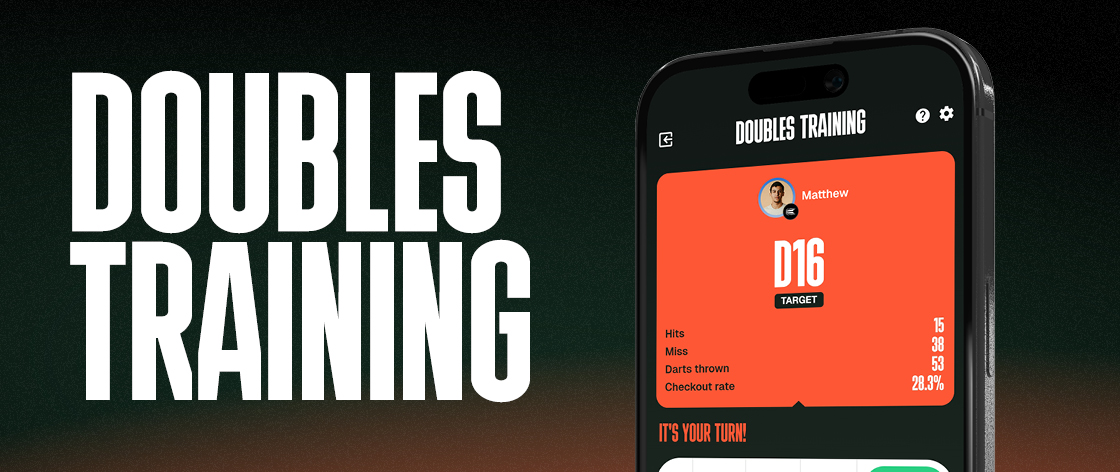
Bob’s 27 and Doubles Training both help you practise finishing targets, but they create a different type of practice session. In Doubles Training, you continue aiming at the current double until you hit it. Every successful dart earns one point, and you only move forward after completing the target. The emphasis is therefore on eventually finding every double.
Bob’s 27 gives you exactly three darts at each target before moving on. Every successful dart adds the numerical value of the double to your score, while missing with all three darts subtracts that value. You cannot recover a missed opportunity by remaining on the same target. Bob’s 27 therefore creates more immediate pressure.
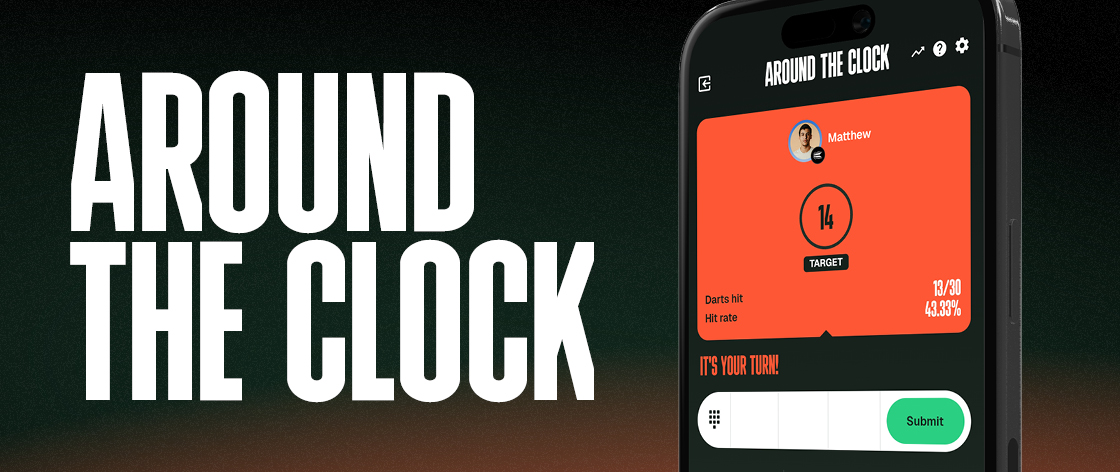
Doubles Training asks whether you can eventually hit the double. Bob’s 27 tests whether you can find it within a single three-dart visit. For a broader accuracy drill that uses every numbered section of the dartboard, you can also play Around the Clock.
Why practise Bob’s 27?
Doubles determine whether you finish a leg in 501 darts. A strong scoring visit can put you in a winning position, but you still need to hit the final double to complete the checkout.
Bob’s 27 recreates part of that pressure by attaching a reward or penalty to every visit. You cannot simply keep throwing until the target is hit. Once your three darts have been thrown, the game moves on.
A classic full game also takes you around the entire doubles ring rather than allowing you to rely only on familiar finishes such as Double 16 or Double 20.
This can expose weaker doubles and help you become more comfortable when a checkout leaves you on a less familiar target.
Our darts checkout guide explains common finishing routes and how different scores can be taken out. You can also use the checkout calculator to explore possible combinations for a specific score.
By comparing your final score and double hit rate across multiple sessions, you can see whether your finishing is becoming more accurate and consistent.
Play Bob’s 27 in DartCounter
Use Bob’s 27 in DartCounter to put your doubles under pressure and track how consistently you find each target. Choose Easy mode when you want to keep practising even after your score falls below zero, or play Hard mode when you want the traditional elimination rule. Track your results, compare your performances over time and keep working towards a higher score.
Improve your doubles with Ultimate
Use Ultimate to review your doubles practice, track your progress and get more insight into parts of the board that need work.
Explore Ultimate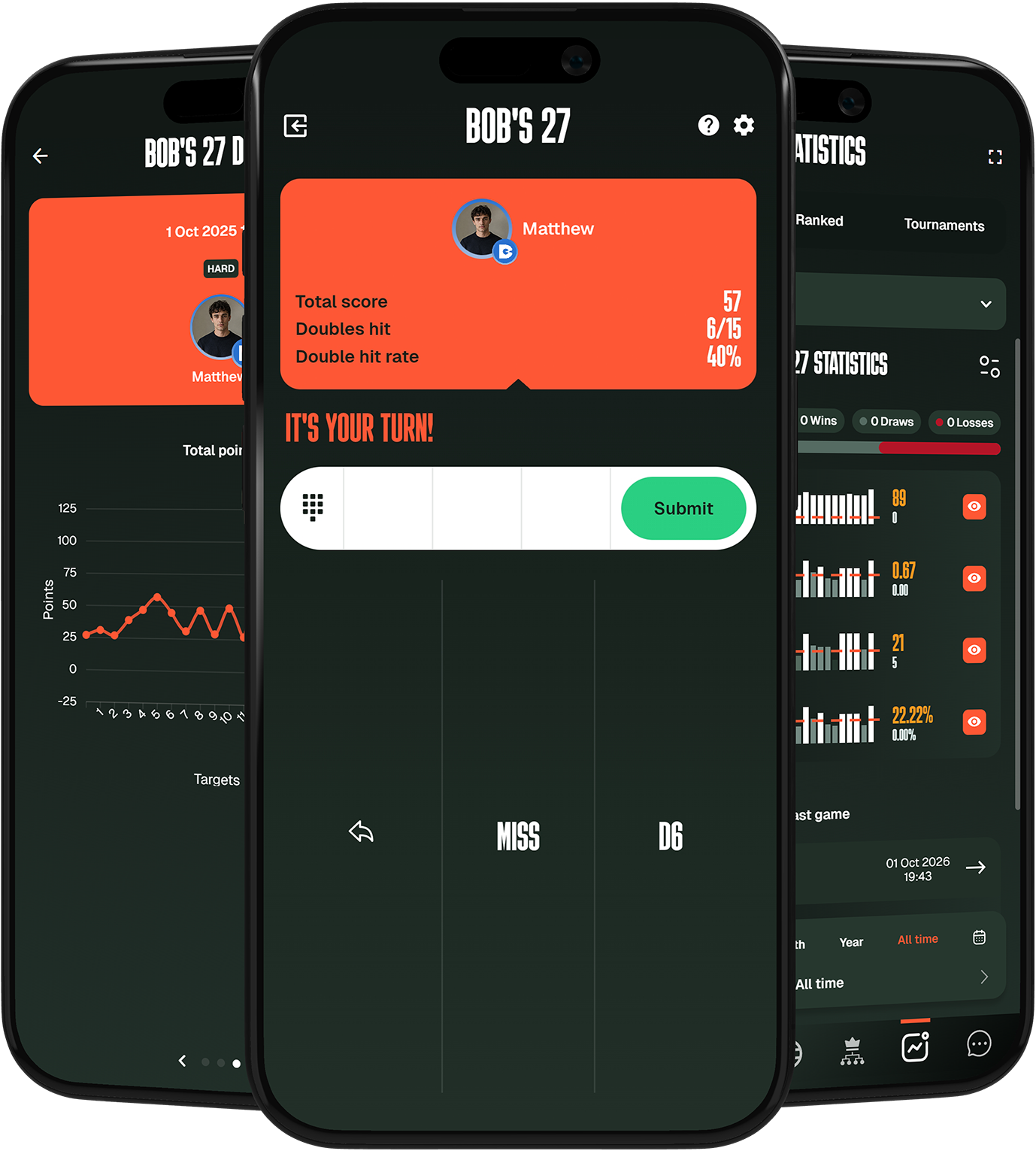
Explore more darts games