
Doubles Training
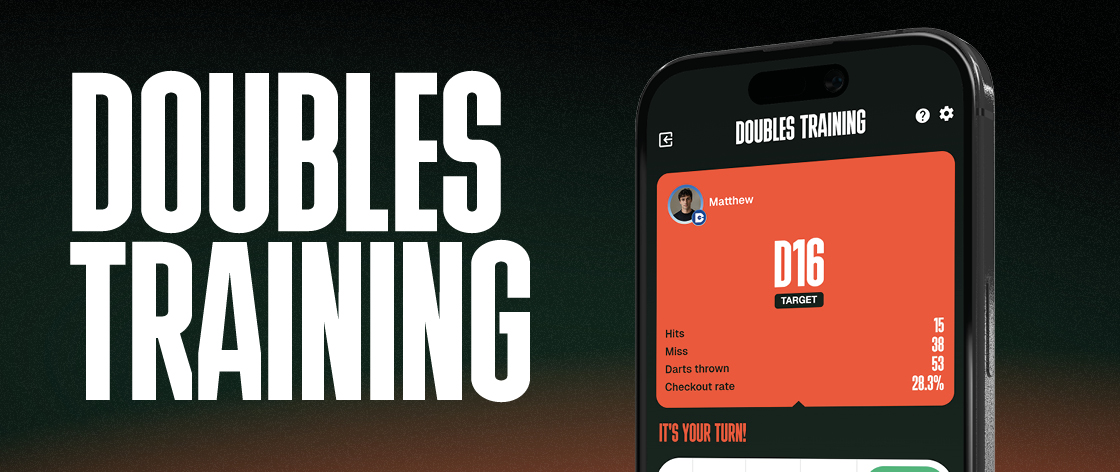
Doubles Training is a focused darts practice game designed to improve your finishing. You aim at each double on the board and continue throwing until you hit the active target.
Because you cannot move on after a miss, the game quickly shows which doubles feel comfortable and which targets still need more work. This makes Doubles Training particularly useful for players who want to become more reliable when finishing legs in games such as 501 darts.
How to play Doubles Training
In Doubles Training, you work through a sequence of doubles and stay on each target until you hit it. Once you hit the active double, you move on to the next target in the sequence. If you miss, you continue aiming at the same double until you eventually hit it.
The game continues until all selected doubles have been completed. Depending on the chosen settings, the sequence can also include the bull as the final target. You can play using manual scoring or OMNI Autoscoring.
For explanations of doubles, bullseye and other common terms, visit our darts glossary. You can also read the darts rules guide for more information about finishing legs and standard gameplay.
Doubles Training scoring
The scoring system is straightforward. Each successful hit on the active double earns one point. Your turn ends as soon as you've hit the target. During your next turn, you begin aiming at the following double in the selected order.
When you miss, you do not receive a point and remain on the same target. You continue throwing at that double until you hit it. The main objective is not to build the highest possible score. The goal is to complete every target as efficiently as possible and reduce the number of darts you need over time.
Completing the sequence
When playing on your own, the objective is to complete the full sequence using as few darts as possible. Your checkout rate and total numbers of darts provide useful benchmarks for future sessions.
When playing with other players, everyone works through the same sequence of doubles. The first player to complete all targets finishes first, but each player is allowed to complete the round before the final order is confirmed.
The main focus remains practice. Your result shows how efficiently you completed the sequence and gives you a clear target to improve during your next session.
Game settings
DartCounter lets you choose the order in which the doubles appear.
With Low to High, you begin at Double 1 and work your way up to Double 20.
With High to Low, you start at Double 20 and move down towards Double 1.
With Random, the doubles appear in an unpredictable order. This prevents you from preparing for the next target and requires you to adjust your aim throughout the game. You can play Doubles Training alone or with friends. The selected order changes the route through the doubles, but not the objective: complete every target and finish the sequence.
For a broader full-board accuracy game with similar order settings, you can also play Around The Clock.
Track your performance
After completing Doubles Training, you can review your successful doubles compared to your misses, as well as how many darts you need to finish the game.
Your checkout rate shows the percentage of attempts that resulted in a successful double. The total number of darts provides another useful benchmark. Completing the same sequence with fewer darts generally indicates greater consistency.
Free users can view their checkout rate at the end of the game and review the result of their most recent session, including the number of darts needed to complete the sequence. Ultimate users can access statistics from all saved games, compare longer periods and track how their checkout rate and total darts change over time.
Doubles Training vs Bob's 27
Doubles Training and Bob's 27 both help you practise the doubles, but they create a different type of training session.
In Doubles Training, you stay on the same target until you hit it. The emphasis is on completing every double and measuring how many attempts you need.
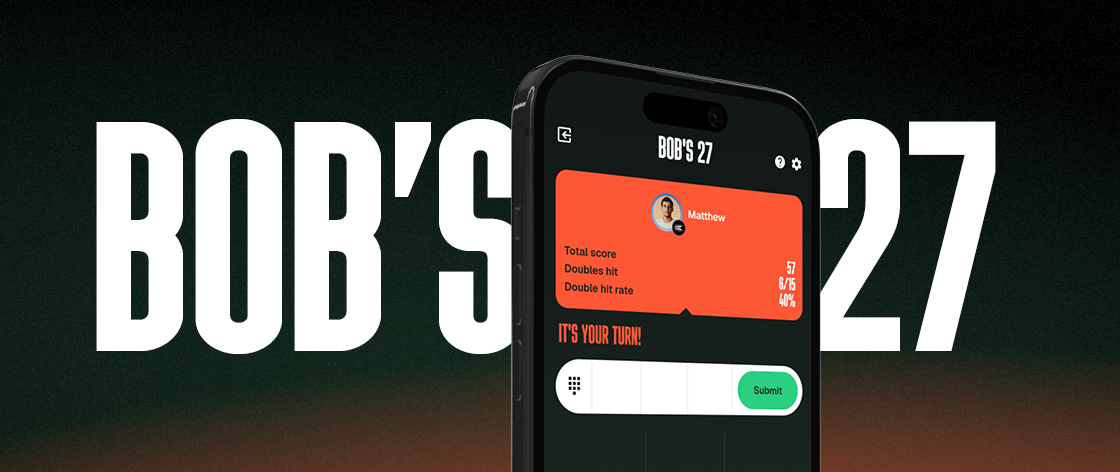
In Bob's 27, you receive three darts at each target and then move on, even when you miss. Successful hits add the value of the double to your score, while missing all three darts subtracts that value.
Bob's 27 therefore introduces more immediate scoring pressure. Doubles Training is more repetitive and controlled, because each target must eventually be completed before you can continue.
Players who want to practise complete finishes rather than individual doubles can also use our darts checkout guide or explore possible routes with the checkout calculator.
Why practise doubles?
In x01 games such as 501, a leg can only be completed by hitting the required finishing double. Strong scoring can put you in a finishing position, but the checkout still determines whether you win the leg.
Doubles Training isolates that final part of the game. Instead of combining scoring, setup shots and finishing, every dart is aimed at a double.
The game also forces you to practise less familiar targets. Many players feel comfortable on preferred doubles such as Double 20, Double 16 or Double 10, but become less consistent when a checkout leaves Double 3, Double 7 or Double 13.
By remaining on each target until you hit it, Doubles Training exposes these differences immediately. Some doubles may take only one or two darts, while others require several turns.
That makes the game useful for building greater confidence across the entire double section rather than relying on a small number of preferred finishes.
Turn doubles practice into progress
With Ultimate, you can track more statistics, review your sessions and use extra DartCounter features to improve your finishing.
Explore Ultimate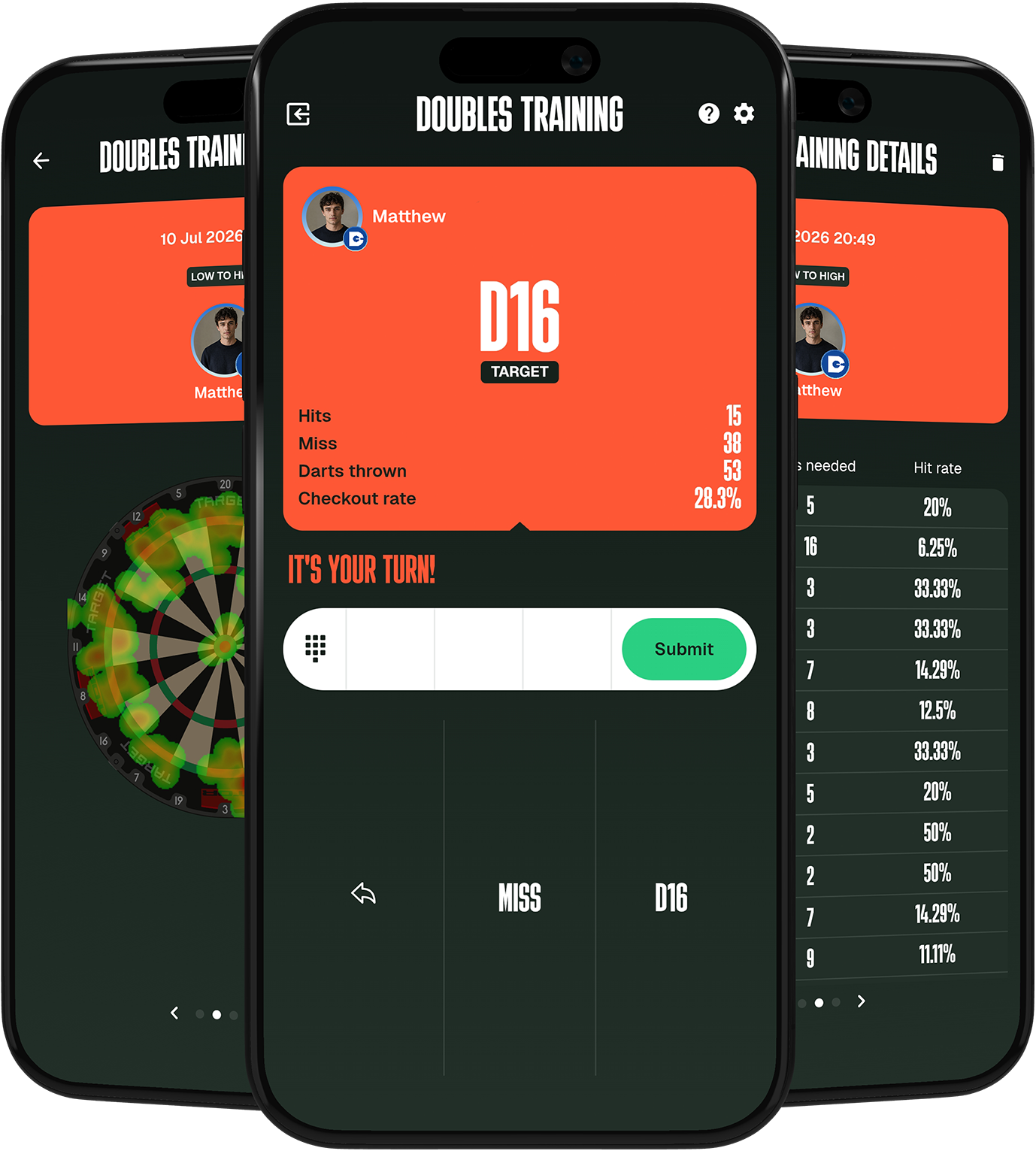
Explore more darts games