
121 Checkout
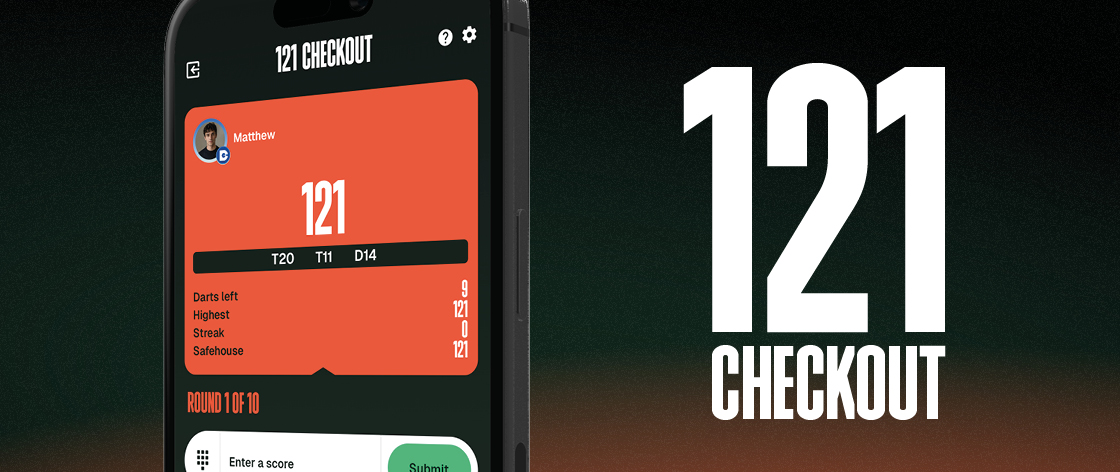
121 Checkout is a focused darts training game that helps you improve your finishing, either on your own or together with another player in co-op mode. You begin on a selected score and try to check out within a limited number of darts. Complete the checkout and your next target becomes higher. Miss it and you fall back to an earlier score.
The combination of increasing finishes, limited darts and the Safehouse rules makes every round matter. Your practice checkout routes, setup shots and doubles while working towards progressively more difficult targets. In co-op mode, you take on that challenge together, adding a collaborative element that sets 121 Checkout apart from many other darts training games.
In DartCounter, you can customise the starting score, dart limit, Safehouse rule and progression to create a 121 Checkout session that matches your level.
What is 121 Checkout?
The traditional version of the game starts at 121. You have nine darts to reduce the score to exactly zero and must finish on a double. When you complete the checkout, your target increases for the following round. With the standard settings, a successful 121 checkout is followed by 122, then 123 and so on. The goal is to reach the highest possible finish before the session ends.
However, progress is not always permanent. When you miss a checkout, the Safehouse setting determines how far you fall back.
This makes 121 checkout different from a regular checkout attempt. You are not trying to finish one score. You are building a run increasingly difficult checkouts while trying to protect the progress you have already made.
New to finishing rules? Our darts checkout guide explains how checkout routes work, why a leg must end on a double and how to approach different remaining scores.
How to play 121 Checkout?
Open 121 checkout from the DartCounter game menu, add one or more players and choose the settings for your session.
Choose your starting score, maximum number of darts, Safehouse rule and number of rounds before starting the game. You can also decide how much target increases after each successful checkout.
During a round, try to take the displayed score down to zero within the selected dart limit. A successful checkout moves you to a higher target in the next round. A failed checkout sends you back to your most recently protected score. When you have not yet created a Safehouse, you return to the original starting score.
For example, you may begin on 121 with nine darts and an increase of one. Checking out 121 moves you to 122. Completing 122 then moves you to 123. If you miss 123, you fall back according to the Safehouse rule selected before the game.
The game ends after the chosen number of rounds. You can also select an unlimited session and continue for as long as you like.
Example of a 121 Checkout game
The example below uses a starting score of 121, nine darts per round, an increase of one and the standard Safehouse rule: After check with 3 darts.
With these settings selected, the game progresses as follows:
The first checkout moves the player from 121 to 122, but it does not create a Safehouse because it took more than three darts. The checkout of 122 is completed within three darts, so that score becomes protected. After missing 123, the player therefore returns to 122 rather than falling back to 121.
Need help choosing a route for your current target? Use our darts checkout calculator to see a possible finish and alternative setup options.
Choose your 121 checkout settings
DartCounter allows you to adapt the game to your level. Beginners can use more darts and smaller increases, while experienced players can make each round more demanding.
Nine darts gives you three visits to complete each finish and is the standard setting for 121 checkout. Selecting six darts or three darts creates more pressure because there is less time to recover from a poor first visit. Choosing 12 or 15 darts gives you more opportunities to work through unfamiliar routes.
Increasing the target by one creates a gradual progression. A larger increase moves you through the checkout range more quickly and gives you a wider variety of finishes during a shorter session.
Players who want to train one particular score can also select a custom starting point. This is useful when a certain checkout regularly causes problems during 501 darts matches.
How does the Safehouse rule work?
The Safehouse protects your progress. Once you complete the selected Safehouse condition, you cannot fall back below that protected finish in later rounds.
The standard 121 Checkout setting is After check with 3 darts. This means a score becomes protected when you check it out within a single visit. If you then miss a higher target, you return to that Safehouse instead of dropping back to the original starting score.
DartCounter provides several Safehouse options:
Play 121 Checkout in co-op mode
121 Checkout can also be played with multiple players. Instead of competing against each other, everyone works together to complete the same target.
Players take turns throwing three darts. The next player continues from the remaining score until the checkout is completed or the maximum number of darts has been used. When the group succeeds, the target increases for the next round.
This cooperative format makes the game suitable for training with a friend or practising as a team. It also encourages players to think beyond their own visit. A good setup score can leave the next player with a more comfortable double or checkout route.
For a more competitive multiplayer format, you can play a regular 501 darts match or choose another game from the DartCounter game collection.
Track your 121 Checkout statistics
After the game, DartCounter shows your highest completed number, longest streak, success rate and total number of successful checkouts. You can also open the session details to review each round and see which targets were completed or missed.
Your previous 121 Checkout sessions remain available in the statistics section. Results can be filtered by day, week, month, year or all time, allowing you to compare perfomances across different periods.
The statistics overview includes your highest number, streak and checkout success rate. Filters can also be used to compare sessions played with particular settings, such as the starting score, maximum number of darts and increase after success.
This makes it possible to see whether you are reaching higher finishes, completing more consecutive checkouts and converting a greater percentage of your attemps.
Why practise 121 Checkout?
Finishing is one of the most important parts of a darts match. Strong scoring can still be wasted when you cannot convert the final checkout. 121 Checkout places repeated emphasis on the part of the game that decides legs.
Because the target changes after successful rounds, you practise different combinations instead of repeatedly throwing at the same double. You learn to recognise checkout routes, choose useful setup shots and adjust when the first dart misses the intended target.
The limited number of darts also creates pressure. You need to make decisions quickly and remain accurate when only one or two visits remain. This is similar to a real match, where a missed opportunity may give your opponent a chance to finish.
Regular checkout practise can also improve your board management. Understanding which numbers leave a preferred double helps you avoid awkward finishes and unnecessary mistakes.
Our darts glossary explains common finishing terms and can help you better understand checkout routes, setup shots and doubles. You can also explore the related training games below to practise other parts of your finishing and match play.
Get more from every checkout session
With Ultimate, you get more ways to practise finishes, review your progress and use extra DartCounter features to improve your checkout game.
Explore Ultimate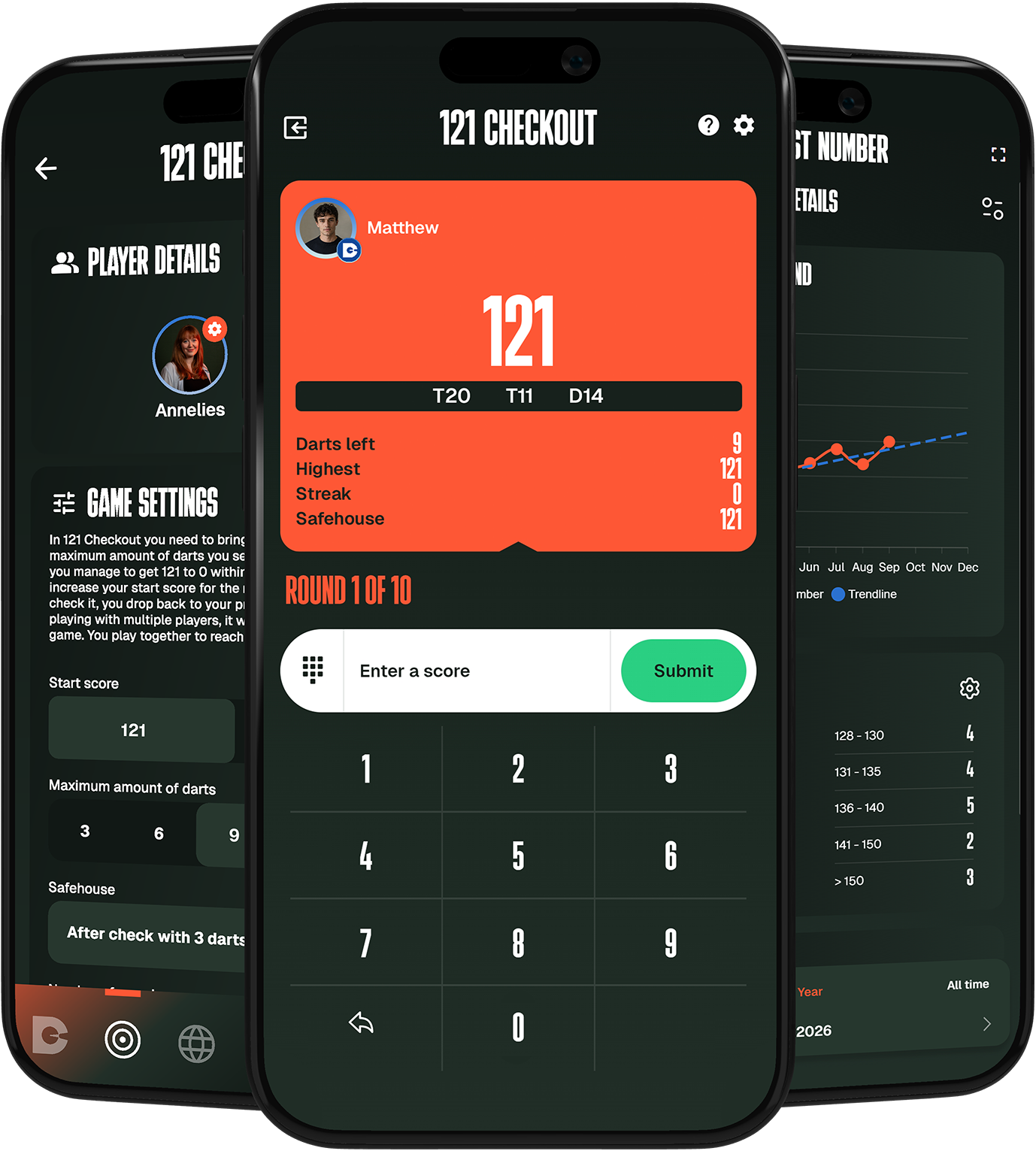
Explore more darts games