
Random Checkout Game

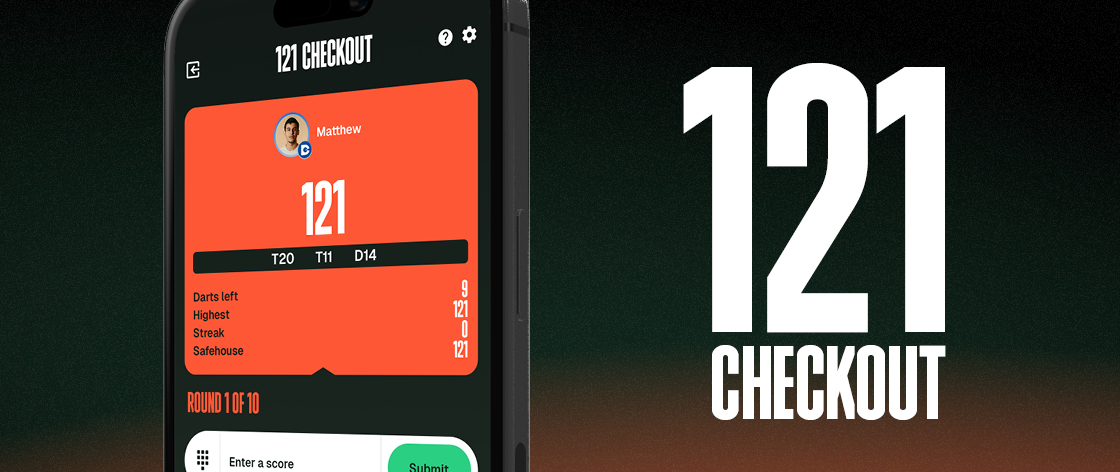
Random Checkout is a darts practice game built entirely around finishing. Instead of starting from 501 and reducing your score, you immediately receive a checkout to complete. Every finish is selected from one of the checkout brackets you enable before the game.
The game is designed to help you recognise checkout routes more quickly, practise under pressure and become more comfortable with both common and difficult finishes. Random Checkout is free to play in DartCounter and can be played on your own, with other local players or against the DartBot.
How to play Random Checkout
At the start of the game, DartCounter generates a finish from one of your selected checkout brackets. You then have the chosen number of darts to complete that checkout.
If you complete the checkout within the dart limit, the attempt is successful and you earn the number of points assigned to that bracket. If you do not complete the checkout within the limit, the attempt ends and the game continues according to the selected bracket order.
Each new attempt gives you another finish to solve. This keeps the focus on checkout routes, doubles and decision making rather than scoring down from a high starting total. Not sure how to approach a finish? The darts checkout calculator can help you find a possible route.
Checkout brackets
Before starting the game, you can decide which checkout ranges you want to include. Lower brackets contain simpler finishes, while higher ranges introduce more difficult combinations and ton-plus checkouts. Each bracket has its own point value, with more difficult finishes awarding more points.
You can enable a single range for focused practice or combine several brackets to create a more varied session. Lower scores are useful for practising doubles and short combinations, while higher brackets require stronger route selection and the ability to recover after a missed treble.
Choose the bracket order
The bracket order determines how you move through the selected checkout ranges. You can choose between default, random and race.
Default
In default mode, you start in the first enabled bracket. Complete the checkout successfully and you move to the next higher selected bracket. Fail to finish within the chosen number of darts and you move down one bracket. When the dart limit is set to unlimited, you do not move down after a failed visit. You can continue working on the same checkout until you complete it. Default mode creates a gradual progression through the game. Successful finishes move you towards more difficult brackets, while missed checkouts can send you back to an easier range.
Random
In random mode, each new bracket is selected at random from all enabled brackets. You do not know whether the next checkout will be a simple double or a difficult ton plus finish. This mode is useful when you want less predictable practice. It tests how quickly you can recognise a checkout and select a route without following a fixed progression.
Race
Race mode turns Random Checkout into a direct competition. Every player starts in the first selected bracket and moves up after completing a checkout successfully. A failed checkout does not move you down. You remain in the same bracket and try again. The first player to complete a checkout in the final enabled bracket wins the game.
Set the dart limit
The dart limit controls how many darts you can use for each checkout. You can choose unlimited darts or set a maximum of 3, 6, 9, 12 or 15 darts.
A three-dart limit gives you one visit to complete the finish. This creates more pressure and is useful for practising the type of opportunity you may receive during a normal match.
A higher dart limit gives you several visits to complete the same checkout. This is more suitable when learning unfamiliar routes or practising difficult finishes.
When you reach the selected limit without finishing, the checkout attempt ends. The game then applies the rules of the selected mode and generates the next attempt.
Choose the number of checkouts
You can also decide how long the game should last. A shorter session works well as a warm-up while a longer game gives you more opportunities to practise different finishes.
You can play ten or twenty-five checkouts, or select an unlimited game and continue until you decide to stop. The number of checkouts determines how many attempts are included in Default and Random mode. Race follows its own winning condition, with the first player to finish a checkout in the final selected bracket taking the win.
Play Random Checkout against the DartBot
Random Checkout can be played against the DartBot. This adds an opponent to your practice session and makes each checkout feel more competitive.
You can select a standard DartBot level or create a custom opponent. With the custom settings, you can adjust values such as checkout percentage and hit chance. You can also use your own recent statistics to create a DartBot that better reflects your current playing level.
Playing against the DartBot is especially useful in Race mode. You still practise the same checkout skills, but now every missed double gives your opponent another opportunity to move closer to the final bracket.
Why practise with Random Checkout?
Checkout practice is about more than memorising combinations. You also need to recognise the score quickly, choose a sensible route and adjust when your first dart misses its intended target.
Random Checkout gives you repeated finishing opportunities without having to play through an entire leg first. This makes it easier to spend a full practice session on doubles, setup shots and checkout decisions.
The different game modes also let you change the type of pressure. Default rewards consistency, Random tests your route recognition and Race adds direct competition. By changing the checkout brackets and dart limit, you can make the game suitable for both beginners and experienced players.
For more help with finishing combinations, read the darts checkout guide and learn how to approach common scores.
Play Random Checkout in DartCounter
DartCounter manages the checkout score, dart limit, bracket progression and point total for you. This means you can focus on your throw instead of manually selecting scores or keeping track of the game.
You can tailor each session by choosing the checkout brackets, bracket order, dart limit and game length. You can practise alone, add local players or challenge the DartBot. Random Checkout is available for free in DartCounter.
Ultimate
DartCounter is free to download, and Random Checkout is available to all players. Ultimate players get access to additional features, including unlimited online matches, more detailed statistics and extra games.
Ultimate players can also save more Action Replays. These short clips let you capture memorable throws and checkouts, making it easier to review or share your best moments.
Omni Scoring
Omni Scoring is an automatic scoring system by Target Darts that connects with DartCounter. Once it is set up, your darts are recorded automatically and you no longer need to enter every score manually.
During Random Checkout, Omni Scoring can track each throw while you focus on the finish in front of you. DartCounter updates the remaining checkout and manages the game as you play.
Virt
Virt is a camera you can use with DartCounter to record your throws. It gives you a clearer view of your technique and allows you to review how you approach different checkout attempts.
Using Virt during Random Checkout can help you compare successful and unsuccessful finishes, review your throwing action and identify patterns in the way you approach doubles and setup shots.
Practise more checkout situations
With Ultimate, you get more ways to review your finishing, track your progress and use extra DartCounter features to improve under pressure.
Explore Ultimate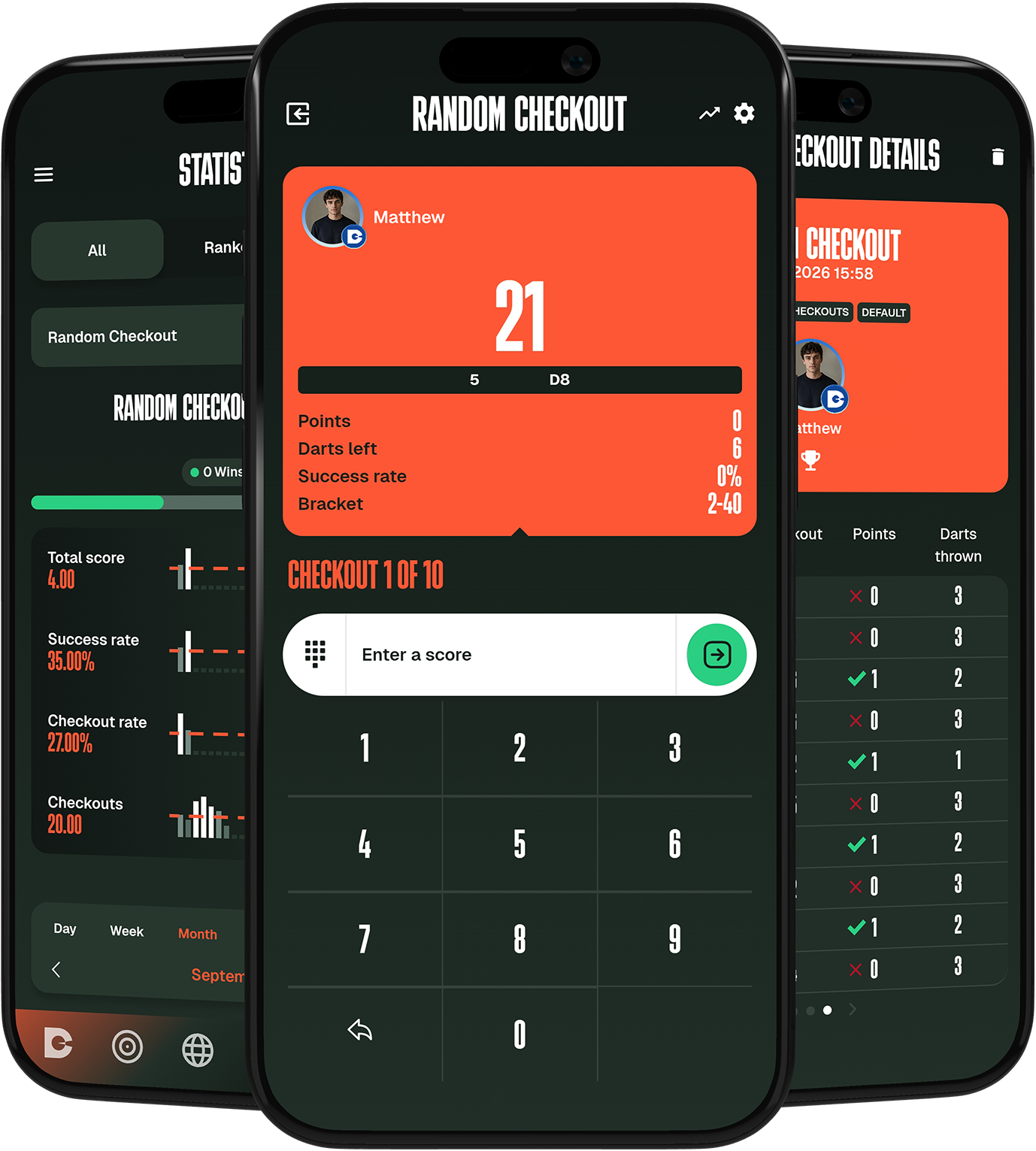
Explore more darts games